


Tirol Expands ID-Austria Access for Foreign Nationals from April 1, 2026: District Offices in Imst, Reutte and Lienz Now Issue Digital ID Locally

Updated: Apr 2
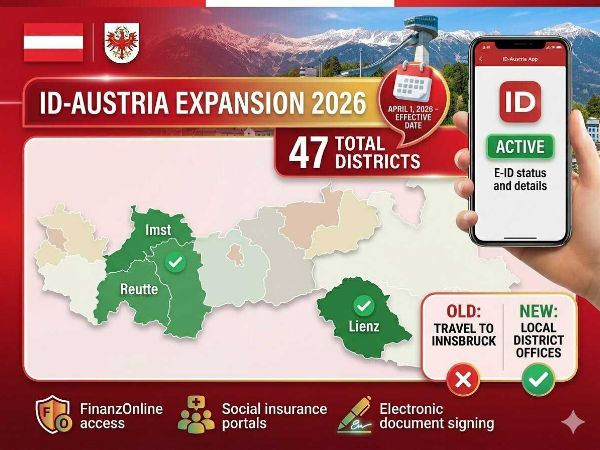
Innsbruck, April 2, 2026 — In a major step toward digital simplification, the Austrian state of Tirol has extended the issuance of ID-Austria — the country’s official digital identity — to foreign nationals living or working in the region. Starting, April 1, 2026, the district authorities (Bezirkshauptmannschaften) in Imst, Reutte, and Lienz can now register and issue the e-ID to non-Austrian citizens, removing the previous need to travel to Innsbruck or limited other locations.
This expansion is part of Tirol’s ongoing “Vereinfachung & Entbürokratisierung” (Simplification and Debureaucratisation) programme, which aims to move more public services online and reduce administrative hurdles for residents and international workers alike.
Why This Change Matters for Expatriates in Tirol
Until now, foreigners in Tirol had to:
Travel to the Provincial Police Headquarters (Landespolizeidirektion) in Innsbruck, or
Explore one of the limited number of participating municipalities, or
Apply through the tax office (Finanzamt).
These options often involved long journeys, especially for people living in remote districts like Reutte (near the German border) or Lienz (in East Tirol). The new system brings the service much closer to home for thousands of international employees, particularly those from Germany, Italy, Croatia, and other neighbouring countries who work in tourism, industry, healthcare, and seasonal sectors.
Digital Affairs Councillor Mario Gerber welcomed the change, stating it will “remove red tape for international employees — from Germany, Italy or Croatia — who increasingly use ID-Austria to access FinanzOnline, social-insurance portals, and other essential digital services.”
What Is ID-Austria and Why Do Foreigners Need It?
ID-Austria is Austria’s secure digital identity system (the successor to the old Handy-Signatur). It allows users to:
Log into government portals such as FinanzOnline (tax returns)
Access social insurance and health insurance services
Sign official documents electronically
Use many other e-government services across Austria and the EU
For foreign nationals with a residence permit or registration in Tirol, having ID-Austria significantly simplifies daily administrative tasks and reduces the need for in-person visits.
How to Get ID-Austria in Tirol from April 2026
Requirements for foreign nationals typically include:
A valid passport or equivalent official photo ID
Meldezettel (registration certificate) proving residence in Tirol
Valid residence permit or proof of legal stay/work in Austria (in most cases)
Being at least 14 years old
Practical details by district:
BH Imst: Appointments must be booked online via the Tirol appointment system (termin.tirol.gv.at)
BH Reutte and BH Lienz: Walk-in service available (no appointment needed, though waiting times may apply during peak hours)
Foreign nationals should bring all required documents and a smartphone to complete the registration process on the spot, including linking the ID-Austria app.
Broader Context and Future Plans
More than 65% of Tirol’s Austrian citizens already possess ID-Austria. The extension to foreigners is expected to accelerate digital uptake among the region’s growing international workforce.
Tirol’s government has indicated that further registration points may be added in the coming months as part of the continued digitalisation drive.
This move aligns with Austria’s national goal of making public administration more accessible and efficient in the digital age, especially for the large number of cross-border workers and expatriates living in the Alpine region.
For the latest updates on ID-Austria registration, digital services in Austria, and residency requirements for foreigners in Tirol, explore our complete collection here: Austria Visa & Immigration Updates
The expansion of ID-Austria services in Imst, Reutte, and Lienz is a welcome relief for international residents and workers in Tirol. By bringing digital identity registration closer to where people live and work, the state is making everyday bureaucracy significantly easier in 2026 and beyond
Comments