


Supreme Court Delivers Landmark 6-3 Victory for Birthright Citizenship: Trump Executive Order Struck Down as Unconstitutional
- Xavi

- Jul 1
- 3 min read
Updated: Jul 1
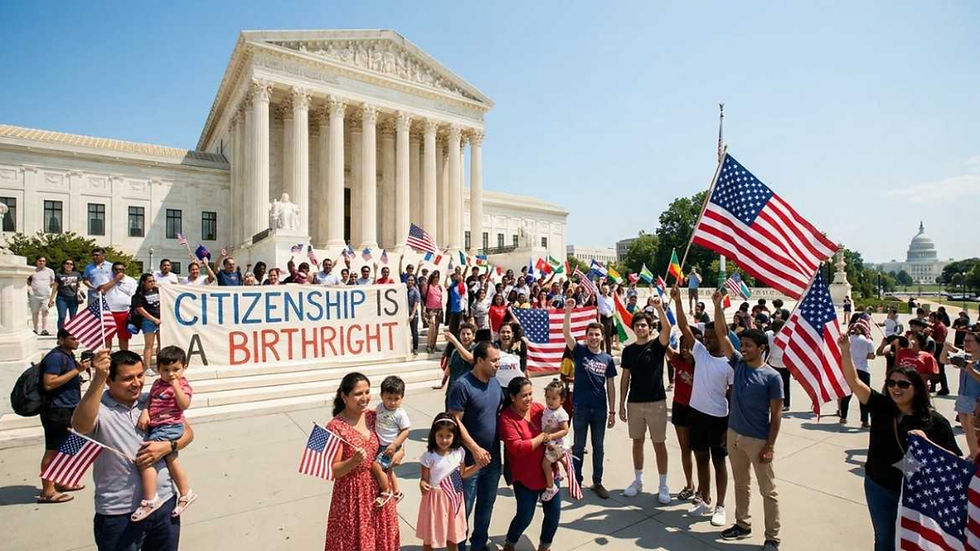
Washington D.C., 1 June 2026 — In a historic and sharply divided decision that reaffirms one of America’s foundational principles, the U.S. Supreme Court has ruled 6-3 to strike down President Donald Trump’s controversial January 20, 2025, Executive Order attempting to limit birthright citizenship.
The ruling firmly upholds the 14th Amendment’s Citizenship Clause, ensuring that children born on U.S. soil — regardless of their parents’ immigration status — are American citizens at birth.
Court’s Historic Ruling: “Subject to the Jurisdiction” of the United States
Writing for the majority, Chief Justice John G. Roberts declared that the Executive Order violated the clear text and long-standing interpretation of the 14th Amendment. The Court held that children born in the United States to parents who are present temporarily or without legal status are “subject to the jurisdiction” of the United States and therefore entitled to citizenship.
Justices Sotomayor, Kagan, Barrett, and Jackson joined Chief Justice Roberts. Justice Kavanaugh concurred in the judgment but wrote separately, preferring to strike down the order on statutory rather than purely constitutional grounds.
The decision in Trump v. Barbara (No. 25-2365) preserves the birthright citizenship framework that has defined American nationality for more than 125 years.
Implications for the Future of Birthright Citizenship
Legal experts describe the ruling as a decisive and likely final blow to attempts to end or significantly restrict jus soli (right of soil) citizenship through executive action. Key implications include:
Constitutional Clarity: The decision reinforces that only a constitutional amendment — not an executive order or ordinary legislation — can alter birthright citizenship.
Policy Stability: Future administrations will face significant legal hurdles if they attempt similar restrictions.
Impact on Families: Hundreds of thousands of children born in the U.S. to undocumented or temporary residents will continue to enjoy full citizenship rights, including access to education, healthcare, and future pathways for their families.
Political Ramifications: The ruling is expected to intensify debates over immigration reform, potentially shifting focus toward comprehensive legislative solutions rather than unilateral executive measures.
International Precedent: The decision reaffirms the United States’ position among a small group of countries that maintain unrestricted birthright citizenship, distinguishing it from many European nations that have tightened such rules.
Reaction from Across the Political Spectrum
While progressive groups and immigrant rights advocates hailed the decision as a victory for constitutional values and human rights, conservative voices expressed disappointment, arguing that the ruling limits Congress and the Executive’s ability to address what they see as loopholes in the immigration system.
President Trump’s administration has not yet issued an official response, but sources close to the White House suggest the focus will now shift toward legislative efforts and stricter enforcement of existing immigration laws.
Broader Context: The Long Battle Over Birthright Citizenship
The debate over birthright citizenship gained renewed intensity during Trump’s second term. The January 2025 Executive Order had sought to exclude children of undocumented immigrants and certain temporary visa holders from automatic citizenship — a move immediately challenged in multiple federal courts.
Today’s Supreme Court decision brings clarity after months of legal uncertainty and marks a significant moment in the ongoing national conversation about immigration, identity, and what it means to be American.
For the latest U.S. immigration policy updates, Supreme Court rulings on citizenship, birthright citizenship analysis, and 2026 immigration law developments, visit: visasupdate.com/blog/categories/usa
Comments