


France Raises Minimum Wage by 2.41% Effective June 1, 2026: Significant Impact on Work Visa Salary Thresholds

Updated: May 22
Paris, May 22, 2026 — The French government has announced a mid-year increase in the national minimum wage (SMIC), boosting it by 2.41% in response to persistent inflationary pressures. The new rate takes effect on June 1, 2026, and will automatically raise salary thresholds for several key immigration and work visa categories.
This adjustment reflects France’s commitment to protecting workers’ purchasing power while maintaining its attractiveness as a destination for international talent.
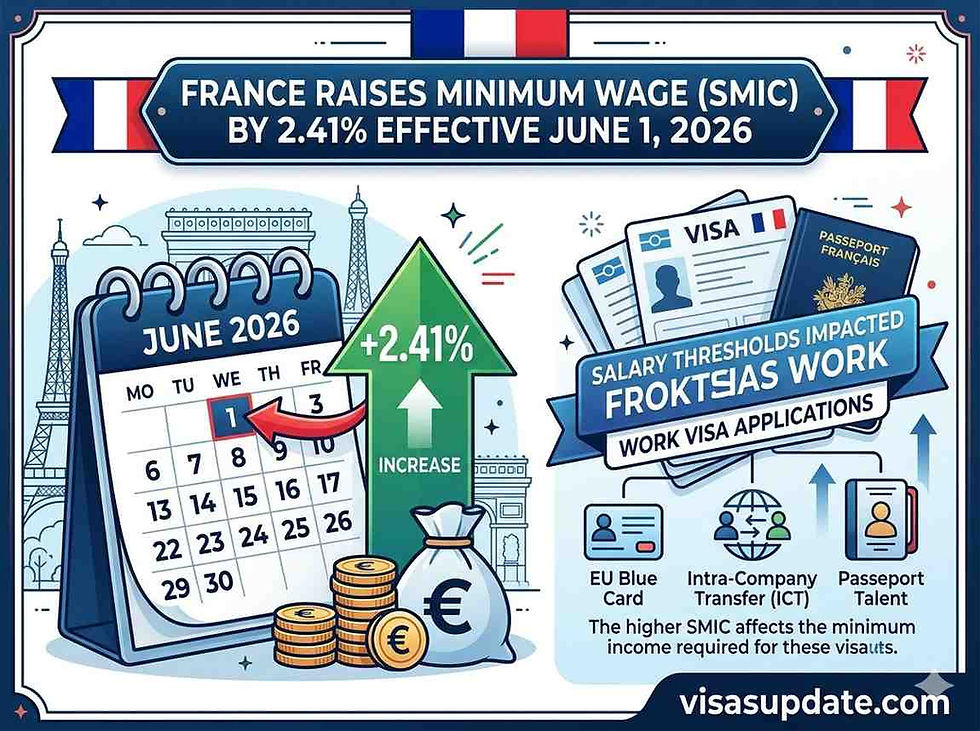
New SMIC Rates from June 1, 2026
Hourly SMIC: Increases from €12.02 to €12.31 (approx. US$14.30)
Gross Monthly SMIC (based on 35-hour week): Rises from €1,823.03 to €1,867.02 (approx. US$2,168.51)
Major Impact on Immigration and Work Visa Thresholds
Because many French work visas and residence permits require salaries above a multiple of the SMIC, this increase will directly affect foreign nationals and sponsoring employers. Key changes include:
Intra-Corporate Transferee (ICT) Employee and Seconded Trainee: Salary must now be at least equal to the new SMIC.
Job Search / Business Creation Visa: Annual gross salary threshold rises from €32,814.60 to €33,606.36 (approx. US$39,033).
Student to Employee Status Change (Master’s degree holders, exempt from labor market test): Minimum annual gross salary now €33,606.36.
Talent Passport – Project Holder & Internationally Renowned: Minimum annual gross remuneration increases to €22,404.24 (approx. US$26,022).
Talent Passport – Legal Representative: Annual gross salary threshold rises to €67,212.72 (approx. US$78,066).
Talent Passport – Artistic and Cultural Professions: Minimum gross monthly remuneration now €1,306.91 (approx. US$1,518).
Why the Increase Was Implemented
The mid-year adjustment is triggered by inflation indicators under French labor law. With living costs remaining elevated, the government has opted for an earlier-than-usual raise to support low- and middle-income workers.
This marks the second SMIC increase in 2026, highlighting ongoing economic pressures in France and across Europe.
Implications for Employers and Foreign Workers
For Employers:
Must update employment contracts and salary offers to meet the new thresholds for sponsored foreign workers.
Increased payroll costs, particularly for roles near the minimum thresholds.
Potential need to review and amend pending visa applications.
For Foreign Nationals:
Higher salary requirements may make certain visa categories more competitive.
Existing permit holders are generally not affected mid-term, but renewals or status changes will need to comply with the new figures.
Broader Context
France continues to balance strong worker protections with efforts to attract skilled international talent through the Talent Passport system and other specialized visas. However, rising labor costs and stricter salary thresholds could influence hiring decisions, especially for SMEs and startups.
The move also comes as many European countries adjust minimum wages and immigration rules in response to inflation, labor shortages, and public sentiment.
What Employers and Applicants Should Do Now
Review all current and upcoming work permit applications to ensure compliance with the new thresholds.
Update salary offer letters and employment contracts before June 1, 2026.
Keep an eye on official announcements from the Ministry of Labor and the French Immigration Office (OFII) for any interim guidance.
For the latest updates, detailed guides, and analysis on French work visas, Talent Passport, salary requirements, and immigration policy changes in 2026, visit: visasupdate.com/blog/categories/france
Comments