


Canada Enacts Bill C-12: Strengthening Immigration System and Borders Act Receives Royal Assent on March 26, 2026

Updated: Apr 2
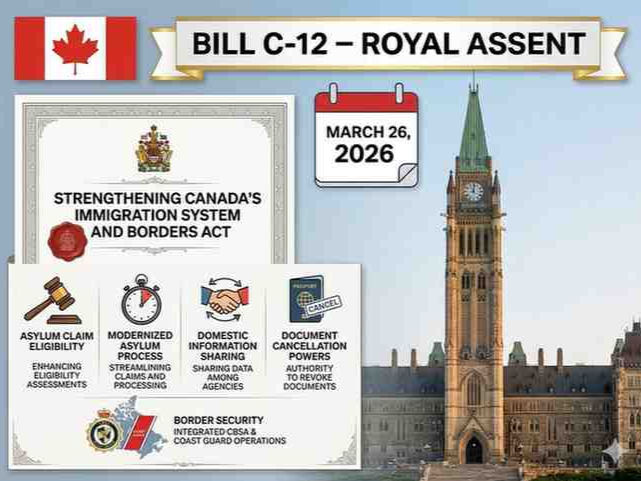
Ottawa, April 1, 2026 — Bill C-12, officially titled the Strengthening Canada’s Immigration System and Borders Act, became law on March 26, 2026, after receiving royal assent. The legislation introduces sweeping reforms aimed at enhancing the integrity of Canada’s immigration and asylum systems, bolstering border security, and equipping authorities with modern tools to address fraud, security risks, and system pressures.
The new law strengthens Canada’s immigration framework across four primary areas: tighter asylum claim eligibility rules, a modernized asylum process, expanded domestic information sharing, and powerful new authorities for managing immigration documents and applications.
Key Changes to the Asylum System
Bill C-12 introduces new eligibility requirements for asylum claims to reduce pressure on the system and prevent its use as a shortcut to regular immigration pathways. These include measures to protect against sudden surges in claims and to close existing loopholes. Ineligible claimants will still have access to pre-removal risk assessments, maintaining Canada’s commitment to international protection obligations.
The legislation also modernizes the overall asylum claim process, introducing efficiencies at every stage — from initial application to decision-making and post-decision procedures. These updates are designed to make the system more sustainable, fair, and efficient while upholding due process.
Some changes, such as certain ineligibility rules, apply retroactively to claims made on or after June 3, 2025.
Enhanced Information Sharing
IRCC now has broader authority to share certain personal information internally and with domestic government partners (federal, provincial, and territorial). This aims to improve service delivery, program collaboration, and overall system integrity while respecting privacy protections under the Canadian Charter of Rights and Freedoms.
New Powers for Immigration Documents and Applications
One of the most significant aspects of Bill C-12 is the introduction of group management tools for immigration documents (e.g., visas, electronic travel authorizations, work permits, study permits). IRCC can now:
Modify, pause, or revoke large sets of immigration documents
Pause application intake
Cancel or suspend processing of applications
These powers can only be exercised in the public interest, such as in cases of widespread fraud, administrative errors, public health or safety concerns, or national security threats. Importantly, they cannot be used to affect asylum claims or to directly grant, change, or revoke immigration status.
Decision-making process requires ministerial proposal (with Public Safety Minister concurrence if affecting people in Canada), Cabinet review, and final approval by the Governor in Council. The government must inform the public and report to Parliament for transparency and accountability.
Broader Border Security and Law Enforcement Enhancements
Beyond immigration processing, Bill C-12 strengthens tools for law enforcement and border agencies:
Expands Canada Border Services Agency (CBSA) authority to examine export goods (matching import powers).
Authorizes the Canadian Coast Guard for security patrols and intelligence activities.
Improves RCMP information sharing on registered sex offenders.
Enhances measures against transnational organized crime, illegal fentanyl (via faster scheduling of precursors), and money laundering/terrorist financing.
Reactions and Context
The government describes the bill as essential for maintaining a secure, fair, and sustainable immigration system amid global challenges. Immigration Minister Lena Diab emphasized that the changes protect the asylum system while upholding access to protection.
Refugee and migrant rights advocates have expressed concerns, arguing that some asylum restrictions could put vulnerable individuals at risk.
What This Means Going Forward
These changes take effect immediately or as specified in the legislation. Affected individuals and stakeholders should monitor official IRCC and CBSA communications for implementation details. Employers, applicants, and immigration practitioners may see impacts on processing timelines, document validity, and eligibility assessments.
For the latest official guidance, visit the Government of Canada’s dedicated pages on Bill C-12.
More Canada Immigration Updates: Canada News Section
This landmark legislation represents one of the most significant overhauls of Canada’s immigration and border framework in recent years, balancing security, efficiency, and humanitarian commitments in a complex global environment.
Comments